Grafana OnCall engine fork — self-hosted on-call scheduler and alert router
 e36757b293
* Allow non-JSON custom webhook templates, provided they render as valid JSON

Previously, both the provided template _and_ the rendered template had
to be valid JSON in order for validation to pass. This was unnecessarily
restrictive: really, only the rendered template needs to be valid JSON.
It also disallowed using templates such as:

    {
      "labels": {{ alert_payload.labels | tojson }}
    }

even though this would be valid JSON after rendering.

This commit relaxes the validation of custom webhook templates so that
they don't need to be valid JSON, provided that the rendered template
_is_ valid JSON. This is checked using a dummy dictionary of render
params, which use a constant string for the `alert_group_id` field
and a `defaultdict(dict)` for the `alert_payload` field. This should
permit templates like the one above, but still deny templates such as

    {
      "labels": {{ alert_payload.labels }}
    }

which would otherwise fail later if `labels` is not valid JSON.

This should resolve #638.

* Use defaultdict(str) instead of defaultdict(lambda: "")

* Add missing comment to resolution note validation code

* Update validation of resolution notes in public API, too

* Add extra test cases for JSON webhook templates endpoint of public API
|
||
|---|---|---|
| .github | ||
| docs | ||
| engine | ||
| examples/terraform | ||
| grafana-plugin | ||
| helm | ||
| tools | ||
| .dockerignore | ||
| .drone.yml | ||
| .env.dev.example | ||
| .gitignore | ||
| .pre-commit-config.yaml | ||
| CHANGELOG.md | ||
| CODE_OF_CONDUCT.md | ||
| DEVELOPER.md | ||
| docker-compose-developer-pg.yml | ||
| docker-compose-developer.yml | ||
| docker-compose.yml | ||
| GOVERNANCE.md | ||
| LICENSE | ||
| LICENSING.md | ||
| MAINTAINERS.md | ||
| Makefile | ||
| README.md | ||
| screenshot.png | ||
| SECURITY.md | ||








Developer-friendly incident response with brilliant Slack integration.

- Collect and analyze alerts from multiple monitoring systems
- On-call rotations based on schedules
- Automatic escalations
- Phone calls, SMS, Slack, Telegram notifications
Getting Started
We prepared multiple environments: production, developer and hobby:
- Download docker-compose.yaml:
curl -fsSL https://raw.githubusercontent.com/grafana/oncall/dev/docker-compose.yml -o docker-compose.yml
- Set variables:
echo "DOMAIN=http://localhost:8080
COMPOSE_PROFILES=with_grafana  # Remove this line if you want to use existing grafana
SECRET_KEY=my_random_secret_must_be_more_than_32_characters_long
RABBITMQ_PASSWORD=rabbitmq_secret_pw
MYSQL_PASSWORD=mysql_secret_pw" > .env
- Launch services:
docker-compose up -d
- Issue one-time invite token:
docker-compose run engine python manage.py issue_invite_for_the_frontend --override
Note: if you remove the plugin configuration and reconfigure it, you will need to generate a new one-time invite token for your new configuration.
- Go to OnCall Plugin Configuration, using log in credentials as defined above:
admin/admin(or find OnCall plugin in configuration->plugins) and connect OnCall plugin with OnCall backend:
Invite token: ^^^ from the previous step.
OnCall backend URL: http://engine:8080
Grafana Url: http://grafana:3000
- Enjoy! Check our OSS docs if you want to set up Slack, Telegram, Twilio or SMS/calls through Grafana Cloud.
Update version
To update your Grafana OnCall hobby environment:
# Update Docker image
docker-compose pull engine

# Re-deploy
docker-compose up -d
After updating the engine, you'll also need to click the "Update" button on the plugin version page. See Grafana docs for more info on updating Grafana plugins.
Join community


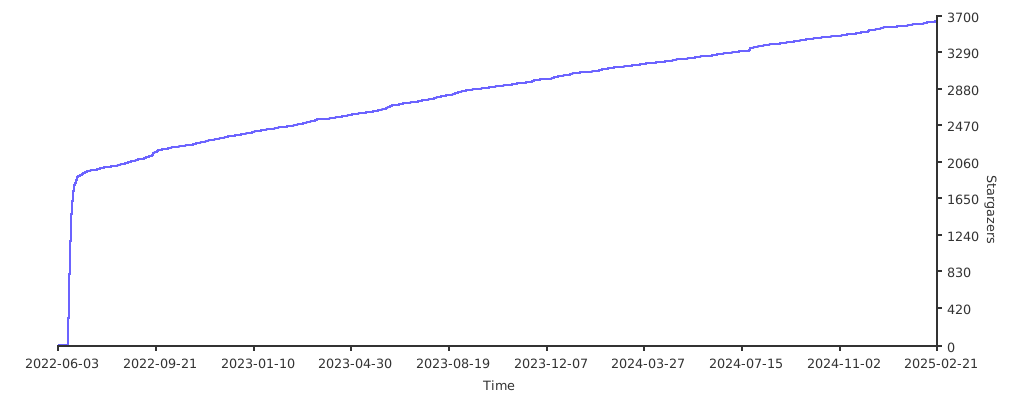
Stargazers over time
Further Reading
- Migration from the PagerDuty - Migrator
- Documentation - Grafana OnCall
- Blog Post - Announcing Grafana OnCall, the easiest way to do on-call management
- Presentation - Deep dive into the Grafana, Prometheus, and Alertmanager stack for alerting and on-call management