 60f018417a
Bumps [urllib3](https://github.com/urllib3/urllib3) from 1.26.18 to 1.26.19. <details> <summary>Release notes</summary> <p><em>Sourced from <a href="https://github.com/urllib3/urllib3/releases">urllib3's releases</a>.</em></p> <blockquote> <h2>1.26.19</h2> <h2>🚀 urllib3 is fundraising for HTTP/2 support</h2> <p><a href="https://sethmlarson.dev/urllib3-is-fundraising-for-http2-support">urllib3 is raising ~$40,000 USD</a> to release HTTP/2 support and ensure long-term sustainable maintenance of the project after a sharp decline in financial support for 2023. If your company or organization uses Python and would benefit from HTTP/2 support in Requests, pip, cloud SDKs, and thousands of other projects <a href="https://opencollective.com/urllib3">please consider contributing financially</a> to ensure HTTP/2 support is developed sustainably and maintained for the long-haul.</p> <p>Thank you for your support.</p> <h2>Changes</h2> <ul> <li>Added the <code>Proxy-Authorization</code> header to the list of headers to strip from requests when redirecting to a different host. As before, different headers can be set via <code>Retry.remove_headers_on_redirect</code>.</li> </ul> <p><strong>Full Changelog</strong>: <a href="https://github.com/urllib3/urllib3/compare/1.26.18...1.26.19">https://github.com/urllib3/urllib3/compare/1.26.18...1.26.19</a></p> <p>Note that due to an issue with our release automation, no <code> multiple.intoto.jsonl</code> file is available for this release.</p> </blockquote> </details> <details> <summary>Changelog</summary> <p><em>Sourced from <a href="https://github.com/urllib3/urllib3/blob/1.26.19/CHANGES.rst">urllib3's changelog</a>.</em></p> <blockquote> <h2>1.26.19 (2024-06-17)</h2> <ul> <li>Added the <code>Proxy-Authorization</code> header to the list of headers to strip from requests when redirecting to a different host. As before, different headers can be set via <code>Retry.remove_headers_on_redirect</code>.</li> <li>Fixed handling of OpenSSL 3.2.0 new error message for misconfiguring an HTTP proxy as HTTPS. (<code>[#3405](https://github.com/urllib3/urllib3/issues/3405) <https://github.com/urllib3/urllib3/issues/3405></code>__)</li> </ul> </blockquote> </details> <details> <summary>Commits</summary> <ul> <li><a href=" |
||
|---|---|---|
| .github | ||
| .tilt | ||
| dev | ||
| docs | ||
| engine | ||
| grafana-plugin | ||
| helm | ||
| terraform | ||
| tools | ||
| .dockerignore | ||
| .gitattributes | ||
| .gitignore | ||
| .markdownlint.json | ||
| .markdownlintignore | ||
| .pre-commit-config.yaml | ||
| .prettierignore | ||
| .prettierrc.js | ||
| .yamllint.yml | ||
| CHANGELOG.md | ||
| docker-compose-developer.yml | ||
| docker-compose-mysql-rabbitmq.yml | ||
| docker-compose.yml | ||
| LICENSE | ||
| Makefile | ||
| README.md | ||
| Tiltfile | ||
Grafana OnCall






Developer-friendly incident response with brilliant Slack integration.
 |

- Collect and analyze alerts from multiple monitoring systems
- On-call rotations based on schedules
- Automatic escalations
- Phone calls, SMS, Slack, Telegram notifications
Getting Started
We prepared multiple environments:
- production
- developer
- hobby (described in the following steps)
-
Download
docker-compose.yml:curl -fsSL https://raw.githubusercontent.com/grafana/oncall/dev/docker-compose.yml -o docker-compose.yml -
Set variables:
echo "DOMAIN=http://localhost:8080 # Remove 'with_grafana' below if you want to use existing grafana # Add 'with_prometheus' below to optionally enable a local prometheus for oncall metrics # e.g. COMPOSE_PROFILES=with_grafana,with_prometheus COMPOSE_PROFILES=with_grafana # to setup an auth token for prometheus exporter metrics: # PROMETHEUS_EXPORTER_SECRET=my_random_prometheus_secret # also, make sure to enable the /metrics endpoint: # FEATURE_PROMETHEUS_EXPORTER_ENABLED=True SECRET_KEY=my_random_secret_must_be_more_than_32_characters_long" > .env -
(Optional) If you want to enable/setup the prometheus metrics exporter (besides the changes above), create a
prometheus.ymlfile (replacingmy_random_prometheus_secretaccordingly), next to yourdocker-compose.yml:echo "global: scrape_interval: 15s evaluation_interval: 15s scrape_configs: - job_name: prometheus metrics_path: /metrics/ authorization: credentials: my_random_prometheus_secret static_configs: - targets: [\"host.docker.internal:8080\"]" > prometheus.ymlNOTE: you will need to setup a Prometheus datasource using
http://prometheus:9090as the URL in the Grafana UI. -
Launch services:
docker-compose pull && docker-compose up -d -
Go to OnCall Plugin Configuration, using log in credentials as defined above:
admin/admin(or find OnCall plugin in configuration->plugins) and connect OnCall plugin with OnCall backend:OnCall backend URL: http://engine:8080 -
Enjoy! Check our OSS docs if you want to set up Slack, Telegram, Twilio or SMS/calls through Grafana Cloud.
Update version
To update your Grafana OnCall hobby environment:
# Update Docker image
docker-compose pull engine

# Re-deploy
docker-compose up -d
After updating the engine, you'll also need to click the "Update" button on the plugin version page. See Grafana docs for more info on updating Grafana plugins.
Join community


Have a question, comment or feedback? Don't be afraid to open an issue!
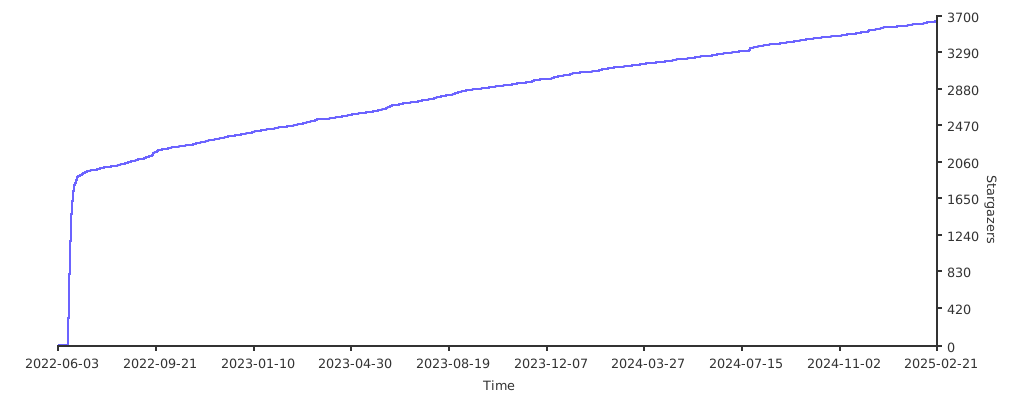
Stargazers over time
Further Reading
- Automated migration from other on-call tools - Migrator
- Documentation - Grafana OnCall
- Overview Webinar - YouTube
- How To Add Integration - How to Add Integration
- Blog Post - Announcing Grafana OnCall, the easiest way to do on-call management
- Presentation - Deep dive into the Grafana, Prometheus, and Alertmanager stack for alerting and on-call management