- Enables new webhooks functionality.
- Database migration will automatically convert existing webhooks to new
ones. Note: Converted webhooks are considered "legacy" they will
continue to work as part of your escalation chain but will no longer be
editable. To make changes use the `Make a copy` action and edit that
one, after you can delete your legacy webhook. Remember to connect your
escalation chain with your newly copied webhook!

---------

Co-authored-by: Maxim <maxim.mordasov@grafana.com>
# What this PR does
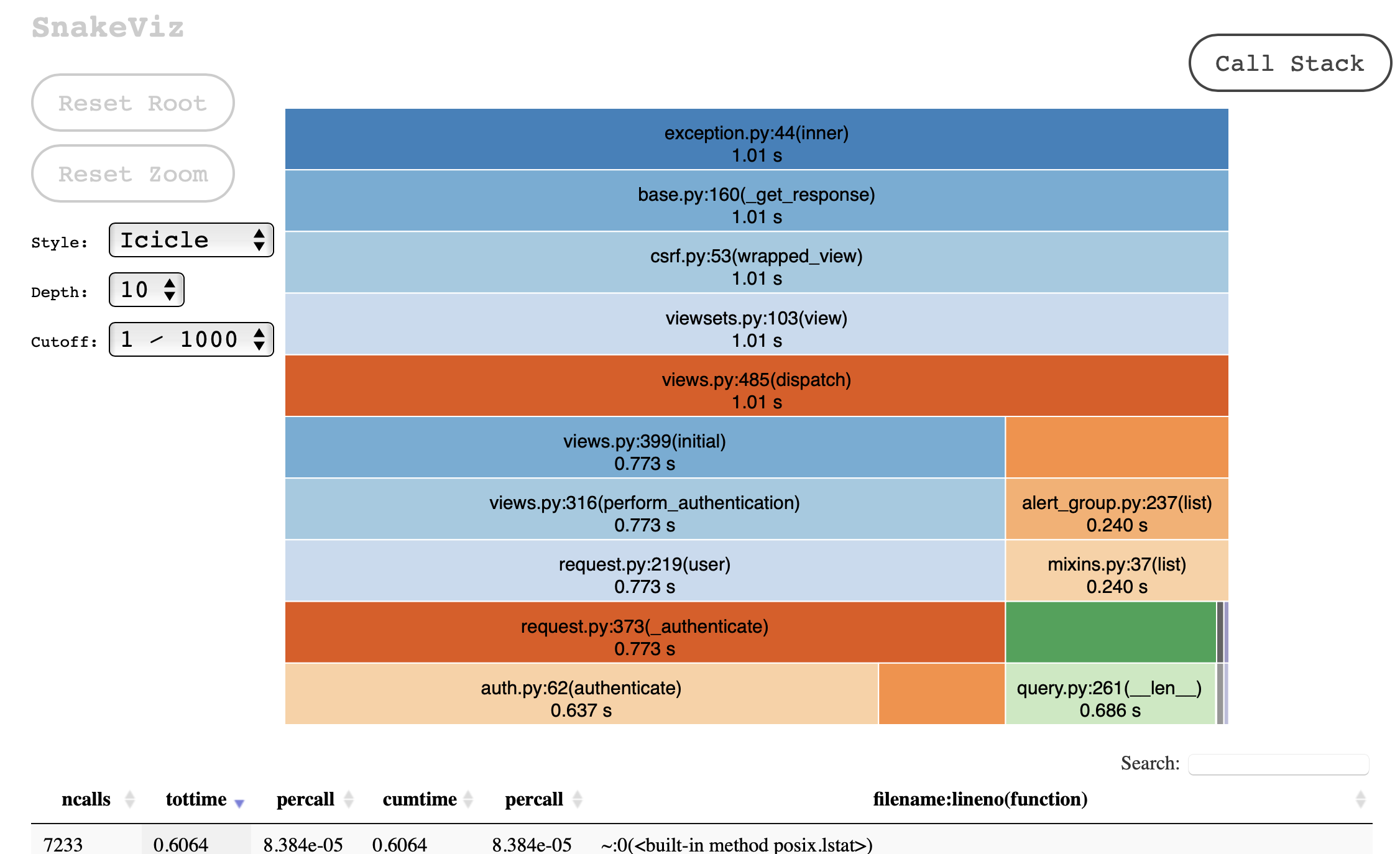
Adds an index on the `started_at` column in the `alerts_alertgroup`
table. For the alert groups query used by the
`check_escalation_finished_task`, this resulted in a huge performance
boost, taking the query time from 89mins to 4secs (on our largest
production dataset).
## Which issue(s) this PR fixes
closes#724
closes https://github.com/grafana/oncall-private/issues/1713
## Checklist
- [x] Unit, integration, and e2e (if applicable) tests updated
- [x] Documentation added (or `pr:no public docs` PR label added if not
required)
- [x] `CHANGELOG.md` updated (or `pr:no changelog` PR label added if not
required)
# What this PR does

See more details comments alongside the code.

Regarding frontend changes, the main changes in this PR are to remove
unused fields on the `Team` interface + unused methods on the `Team`
model.

## Checklist

- [x] Unit, integration, and e2e (if applicable) tests updated
- [ ] Documentation added (or `pr:no public docs` PR label added if not
required) (N/A)
- [ ] `CHANGELOG.md` updated (or `pr:no changelog` PR label added if not
required) (N/A)
# What this PR does

Address issue where if the user had multiple registered devices w/ FCM,
doing django queries like `.first()` could potentially pick the wrong
device. Do this in two ways:
1. set the `DELETE_INACTIVE_DEVICES` `fcm_django` setting to `True`.
According to the
[docs](20e275618b/README.rst (L127-L130)),
this works as follows:

> devices to which notifications cannot be sent, are deleted upon
receiving error response from FCM
2. Customizing the `FCMDevice` model provided by `fcm_django`. Add a new
method, `get_active_device_for_user`, so that we can centralize the
logic for this rather than duplicating
`FCMDevice.objects.filter(user=user).first()`

## Which issue(s) this PR fixes

https://raintank-corp.slack.com/archives/C0229FD3CE9/p1688461915752119

## Checklist

- [x] Unit, integration, and e2e (if applicable) tests updated
- [ ] Documentation added (or `pr:no public docs` PR label added if not
required) (N/A)
- [x] `CHANGELOG.md` updated (or `pr:no changelog` PR label added if not
required)
Added integration with [zvonok.com](https://zvonok.com) service.

Features:
- Phone number validation
- Test calls
- Selection of pre-recorded audio
- Making calls
- Processing call status
- Acknowledgment alert group (optional)

To process the call status, it is required to add a postback with the
GET method on the side of the zvonok.com service with the following
format ([more info
here](https://zvonok.com/ru-ru/guide/guide_postback/)):

```${ONCALL_BASE_URL}/zvonok/call_status_events?campaign_id={ct_campaign_id}&call_id={ct_call_id}&status={ct_status}&user_choice={ct_user_choice}```

The names of the transmitted parameters can be redefined through environment variables.

---------

Co-authored-by: Innokentii Konstantinov <innokenty.konstantinov@grafana.com>
This PR adds new metric for Prometheus exporter
"user_was_notified_of_alert_groups" which counts how many alert groups
user was notified of.

## Checklist

- [x] Unit, integration, and e2e (if applicable) tests updated
- [x] Documentation added (or `pr:no public docs` PR label added if not
required)
- [x] `CHANGELOG.md` updated (or `pr:no changelog` PR label added if not
required)

---------

Co-authored-by: Joey Orlando <joey.orlando@grafana.com>
# What this PR does
See #2173
Also, closes#2187 . All of the new files under `type_stubs/icalendar`
were autogenerated by running:
```bash
stubgen -p icalendar -o type_stubs
```
## Checklist
- [ ] Unit, integration, and e2e (if applicable) tests updated
- [ ] Documentation added (or `pr:no public docs` PR label added if not
required)
- [ ] `CHANGELOG.md` updated (or `pr:no changelog` PR label added if not
required)
# What this PR does
Introduces AlertManagerV2 integration with better grouping and
autoresolving, not intended for production use yet.

---------

Co-authored-by: Ildar Iskhakov <Ildar.iskhakov@grafana.com>
# What this PR does

RequestBodyReadingMiddleware is excess as [post-buffering is
enabled](https://github.com/grafana/oncall/blob/dev/engine/uwsgi.ini#L17):

If an HTTP request has a body (like a POST request generated by a form),
you have to read (consume) it in your application. If you do not do
this, the communication socket with your webserver may be clobbered. If
you are lazy you can use the post-buffering option that will
automatically read data for you. For Rack applications this is
automatically enabled.
(https://uwsgi-docs.readthedocs.io/en/latest/ThingsToKnow.html)

## Which issue(s) this PR fixes

## Checklist

- [ ] Unit, integration, and e2e (if applicable) tests updated
- [ ] Documentation added (or `pr:no public docs` PR label added if not
required)
- [ ] `CHANGELOG.md` updated (or `pr:no changelog` PR label added if not
required)
# What this PR does
This PR moves phone notification logic into separate object PhoneBackend
and introduces PhoneProvider interface to hide actual implementation of
external phone services provider. It should allow add new phone
providers just by implementing one class (See SimplePhoneProvider for
example).
# Why
[Asterisk PR](https://github.com/grafana/oncall/pull/1282) showed that
our phone notification system is not flexible. However this is one of
the most frequent community questions - how to add "X" phone provider.
Also, this refactoring move us one step closer to unifying all
notification backends, since with PhoneBackend all phone notification
logic is collected in one place and independent from concrete
realisation.
# Highligts
1. PhoneBackend object - contains all phone notifications business
logic.
2. PhoneProvider - interface to  external phone services provider.
3. TwilioPhoneProvider and SimplePhoneProvider - two examples of
PhoneProvider implementation.
4. PhoneCallRecord and SMSRecord models. I introduced these models to
keep phone notification limits logic decoupled from external providers.
Existing TwilioPhoneCall and TwilioSMS objects will be migrated to the
new table to not to reset limits counter. To be able to receive status
callbacks and gather from Twilio TwilioPhoneCall and TwilioSMS still
exists, but they are linked to PhoneCallRecord and SMSRecord via fk, to
not to leat twilio logic into core code.

---------

Co-authored-by: Yulia Shanyrova <yulia.shanyrova@grafana.com>
Bring back `FCM_PROJECT_ID` env variable that was removed in
https://github.com/grafana/oncall/pull/1969.
I made an incorrect assumption that project ID is already specified in
the credentials file, but in fact project ID can be different from the
one in credentials file.
# What this PR does
Allow passing Google application credentials (used to send FCM messages
using `fcm-django`) as an environment variable
`GOOGLE_APPLICATION_CREDENTIALS_JSON_BASE64`. If the env variable is not
provided, credentials will be taken from file. This change allows uWSGI
workers send messages to FCM (currently it's not possible because the
uWSGI user doesn't have access to the credentials file) + makes
configuration more consistent.

Also removes a redundant `FCM_PROJECT_ID` env variable (Google
application credentials already contain the project ID).

## Which issue(s) this PR fixes

## Checklist

- [x] Unit, integration, and e2e (if applicable) tests updated
- [x] Documentation added (or `pr:no public docs` PR label added if not
required)
- [x] `CHANGELOG.md` updated (or `pr:no changelog` PR label added if not
required)
# What this PR does

add a new endpoint, `GET /maintenance-mode/`, which returns either a
string message pulled from the
`CURRENTLY_UNDERGOING_MAINTENANCE_MESSAGE` env var, or `None` + update
the UI to conditionally show this message if it is set

<img width="1321" alt="Screenshot 2023-05-10 at 11 28 16"
src="https://github.com/grafana/oncall/assets/9406895/833a77fb-3a90-4f9f-88d6-dae0d98d99d4">


## Checklist

- [x] Unit, integration, and e2e (if applicable) tests updated
- [x] Documentation added (or `pr:no public docs` PR label added if not
required) (N/A)
- [x] `CHANGELOG.md` updated (or `pr:no changelog` PR label added if not
required)
# What this PR does

https://www.loom.com/share/c5deb35309604cfdab6176c44de7b15e

## Checklist

- [x] Unit, integration, and e2e (if applicable) tests updated
- [ ] Documentation added (or `pr:no public docs` PR label added if not
required)
- [x] `CHANGELOG.md` updated (or `pr:no changelog` PR label added if not
required)
- Rename Firing to Alert Group Created to reduce confusion as to why the
event only first once and not when unresolve or unacknowledge returns
the alert group to the firing state.
- Increase password field length
- Do not filter webhook execution by team, team is just for filtering
ownership now
- Do not log webhook triggers in alert group escalation log if the
webhook does not trigger (Status/response will still be stored)
- Fix formatting for response content and data fields on the Status page
- Add a content length limit for responses being stored (50000
characters)
# What this PR does

## Which issue(s) this PR fixes

## Checklist

- [x] Unit, integration, and e2e (if applicable) tests updated
- [x] Documentation added (or `pr:no public docs` PR label added if not
required)
- [x] `CHANGELOG.md` updated (or `pr:no changelog` PR label added if not
required)

---------

Co-authored-by: Joey Orlando <joey.orlando@grafana.com>
# What this PR does

## Which issue(s) this PR fixes

## Checklist

- [ ] Unit, integration, and e2e (if applicable) tests updated
- [ ] Documentation added (or `pr:no public docs` PR label added if not
required)
- [ ] `CHANGELOG.md` updated (or `pr:no changelog` PR label added if not
required)
This PR cuts GitHub Action build times from 14-15 minutes, down to just
under 7 minutes. It does this by:
- caching `grafana-plugins/node_modules` and `pip` dependencies based on
their respective dependency files (eg. `requirements.txt` &
`yarn.lock`). This step alone saves ~3 minutes.
- get rid of the "build-engine-docker-image" and
"backend-integration-tests" jobs in the old "Integration Tests"
workflow. This was split out this way so that we could build the backend
docker image once, upload the artifact, and then reuse it across the
backend and e2e tests. We no longer need these backend integration tests
because we are testing the same thing in the e2e tests. This saves ~45
seconds of having to upload the image artifact.
- few improvements within the integration tests themselves:
- move plugin configuration to the `globalSetup.ts`. This means that
every test does not need to check if the plugin has been configured
because it is done once before all the tests are run.
- cache the plugin frontend build. If your commit doesn't change
anything to `grafana-plugin/src` or `grafana-plugin/yarn.lock` it should
be safe to reuse a previously built/cached version of the plugin
frontend. This saves ~3 minutes
- cache playwright binaries/dependencies. Only re-install them if the
version of `@playwright/test` in `grafana-plugin/yarn.lock` changes.
This saves ~3 minutes.

**Other things to mention**
Once we refactor the `GSelect` component to not call the `onChange`
callback on every keyDown event (#1628), this should allow us to
parallelize the integration tests, and cut the time required to execute
the tests themselves in half
# What this PR does

This PR:
- modifies the `check_escalation_finished_task` celery task to:
  - do stricter escalation validation based on the alert group's
escalation snapshot (see the `audit_alert_group_escalation` method in
`engine/apps/alerts/tasks/check_escalation_finished.py` for the
validation logic)
- use a read-only database for querying alert-groups if one is
configured, otherwise use the "default" one
- ping a configurable heartbeat (new env var
`ALERT_GROUP_ESCALATION_AUDITOR_CELERY_TASK_HEARTBEAT_URL` added)
- increase the task frequency from every 10 to every 13 minutes (this
can be configured via an env variable)
  - adds public documentation on how to configure this auditor task
- modifies the local celery startup command to properly take into
consideration all celery related env vars (similar to the ones we use in
`engine/celery_with_exporter.sh`; this made it easier to enable `celery
beat` locally for testing)
- removes the following code:
- removes references to `AlertGroup.estimate_escalation_finish_time` and
marks the model field as deprecated using the [`django-deprecate-fields`
library](https://pypi.org/project/django-deprecate-fields/). This field
was only used for the previous version of this validation task
- `EscalationSnapshotMixin.calculate_eta_for_finish_escalation` was only
used to calculate the value for
`AlertGroup.estimate_escalation_finish_time`
  - `calculate_escalation_finish_time` celery task


## Which issue(s) this PR fixes

https://github.com/grafana/oncall-private/issues/1558

## Checklist

- [x] Tests updated
- [x] Documentation added
- [x] `CHANGELOG.md` updated
This PR add Inbound Email integration.

It designed to support some variety of ESPs, but in prod we will use
Mailgun, so locally I tested it only with mailgun ESP.

**Important:**
To make it work on different clusters I'm planning to provide different
email domains for different regions, like ....@us.oncall.grafana.net,
...@eu.oncall.grafana.net

---------

Co-authored-by: Innokentii Konstantinov <innokenty.konstantinov@grafana.com>
It's a duplicate of LICENSE env var

**What this PR does**:
Remove OSS_INSTALLATION env var in favour of LICENSE env var. Also, I
refactored features tests a little. From my point of view it makes
little sense to test if all features are disabled or enabled. Better to
test specific use-case (e.g. oss installation).
Also to test that all features are disabled it is needed to set LICENSE
equals cloud license, which makes test confusing.

**Checklist**
- [x] Tests updated
- [ ] Documentation added
- [ ] `CHANGELOG.md` updated
# What this PR does

- Implement recapthca v3 check. DRF_RECAPTCHA didn't support hostname
validation and it's too complicated to add it.
- Add validation of verification code on oncall side to not to call
twilio with obviously invalid codes

## Checklist

- [x] Tests updated
- [ ] Documentation added
- [ ] `CHANGELOG.md` updated
# What this PR does

This PR fixes templates behaviour for public and private api. It fix
"reset to default" for templates from messaging backends and some minor
bugs. Also added acknowledge signal and source link templates

## Checklist

- [x] Tests updated
- [x] Documentation added
- [x] `CHANGELOG.md` updated
# What this PR does
Move reCAPTCHA site key to backend environment for easier management to
support multiple environments.

## Which issue(s) this PR fixes

## Checklist

- [ ] Tests updated
- [ ] Documentation added
- [x] `CHANGELOG.md` updated
# What this PR does

Adds reCAPTCHA validation to the get mobile verification code endpoint

## Which issue(s) this PR fixes

## Checklist

- [x] Tests updated
- [ ] Documentation added (N/A)
- [x] `CHANGELOG.md` updated

---------

Co-authored-by: Maxim <maxim.mordasov@grafana.com>
# What this PR does

This PR adds
[django-migration-linter](https://github.com/3YOURMIND/django-migration-linter)
to keep database migrations
 backwards compatible

- we can automatically run migrations and they are zero-downtime, e.g.
old code can work with the migrated database
 - we can run and rollback migrations without worrying about data safety
- OnCall is deployed to the multiple environments core team is not able
to control

See [django-migration-linter
checklist](https://github.com/3YOURMIND/django-migration-linter/blob/main/docs/incompatibilities.md)
for the common mistakes and best practices


## Which issue(s) this PR fixes

## Checklist

- [ ] Tests updated
- [ ] Documentation added
- [ ] `CHANGELOG.md` updated

---------

Co-authored-by: Joey Orlando <joey.orlando@grafana.com>
# What this PR does
Fixes an issue when a local dev setup becomes extremely slow.

- Set `DEBUG` and `SILK_PROFILER_ENABLED` to `False` by default + add
utility make commands to toggle it
- Use `uwsgi` instead of Django's built-in `runserver` for local dev
setup
- Limit Celery concurrency to 3 for local dev setup (previously was 20,
used >1GB RAM on my machine)

---------

Co-authored-by: Joey Orlando <joey.orlando@grafana.com>
Slash command needs to be added to slack app manifest:

```
  slash_commands:
    - command: /escalate
      url: https://<oncall-public-url>/slack/interactive_api_endpoint/
      description: Create a new alert group escalation
      should_escape: false
```